
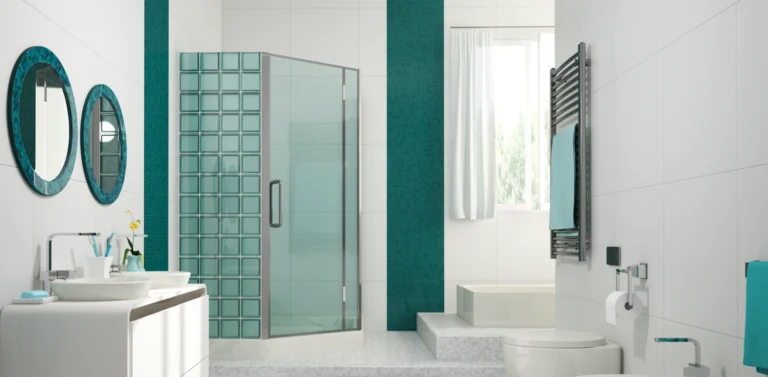
During a bathroom renovation, the shower frequently serves as the primary architectural and visual focal point of the space. Its scale, materials, and placement significantly influence how the room looks and functions.
Homeowners and designers often want a space that feels open and bright. It should still offer privacy, durability, and long-term performance. For this reason, glass block shower walls remain a practical and stylish option over traditional shower wall systems.
When choosing materials, it helps to see how glass block shower walls offer clear benefits. They can outperform standard tile walls and flat glass enclosures. While conventional shower walls meet basic functional requirements, glass block introduces structural integrity, light diffusion, and architectural character in a single integrated system.

What Are Glass Block Shower Walls?
Builders create glass block shower walls by stacking solid or hollow glass blocks.
This creates a sturdy, water-resistant shower enclosure. You can set these blocks with mortar or mortarless installation systems to create a stable, sealed wall assembly. Unlike clear tempered glass panels, which provide transparency, glass block diffuses light while maintaining privacy.
Glass block shower walls can be designed in a variety of configurations, including:
- Walk-in showers that often do not require a door
- Curved or angled wall designs
- Full-height or half-height enclosures
- Custom layouts incorporating textured or decorative blocks
The result is a bright, structured enclosure that serves both functional and aesthetic purposes.
Benefits of Glass Block Shower Walls
1. Privacy and Natural Light
One major advantage of glass block shower walls is how they balance privacy and light. Traditional tile walls completely block natural light, which can make a bathroom feel enclosed or dim. Clear glass panels allow light to pass freely but provide limited privacy unless treated with frosting or film.
Glass block shower walls diffuse incoming light while obscuring direct visibility. This creates a soft, luminous effect that brightens the shower area and surrounding space without compromising privacy. The material delivers both privacy and natural light within a single, integrated solution.
2. Long-Term Durability
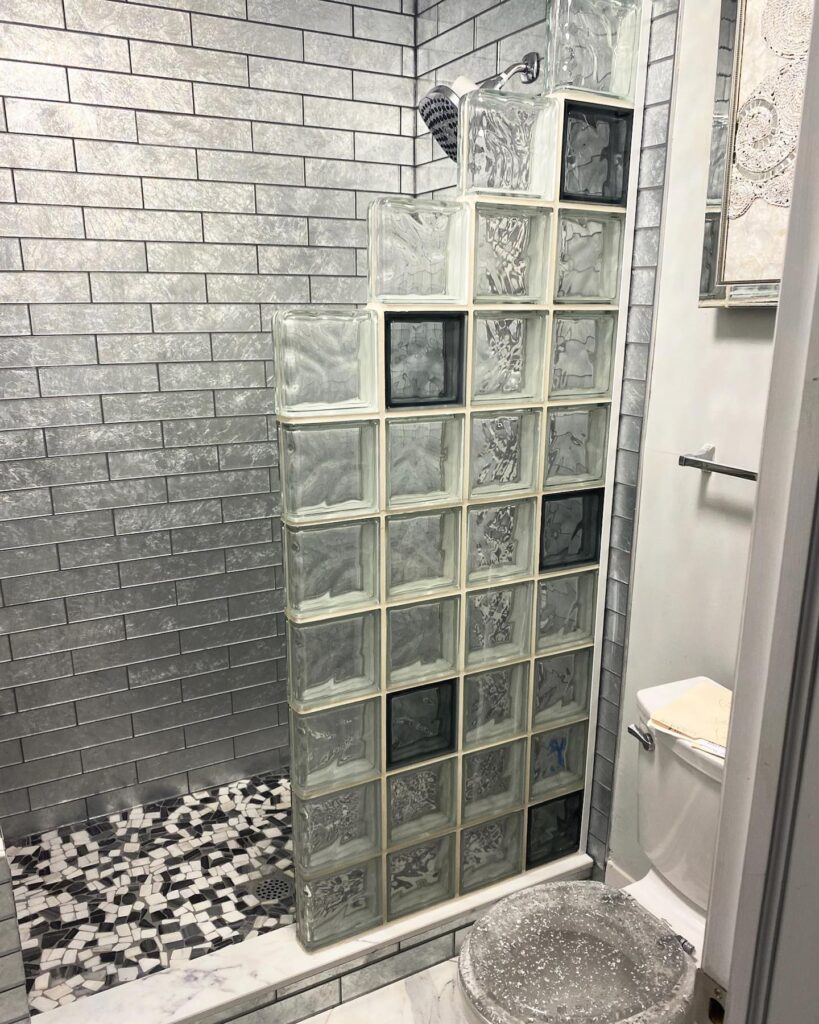
Durability is a critical factor in any wet environment. Glass block is thick, impact-resistant, and engineered for structural stability. Unlike thin sheet glass panels that rely on hardware and framing systems, glass block forms a substantial wall assembly.
When properly installed, glass block shower walls provide decades of reliable performance. They resist cracking, warping, and shifting. This makes them a dependable choice for busy home bathrooms and commercial spaces.
3. Low Maintenance Performance
Maintenance requirements often determine long-term satisfaction with a shower system. Traditional tile installations can involve numerous grout joints that require sealing and periodic upkeep. Clear glass panels frequently show water spots and require constant cleaning to maintain their appearance.
Glass block shower walls offer a practical advantage. They have significantly fewer grout lines than small-format tile, and the non-porous glass resists moisture absorption—reducing the likelihood of mold growth and staining.
Another key benefit, depending on the pattern selected, is the ability to visually minimize water marks. Textured patterns like Cortina do an excellent job of diffusing light and helping conceal water spotting, making them especially forgiving in everyday use. Smoother patterns such as Nubio, while still durable and easy to clean, tend to show water marks more readily due to their clearer surface.
The result is a durable, low-maintenance shower wall system that balances performance with thoughtful design—while allowing homeowners to choose the level of texture and concealment that fits their space.
4. Elimination of Door Hardware
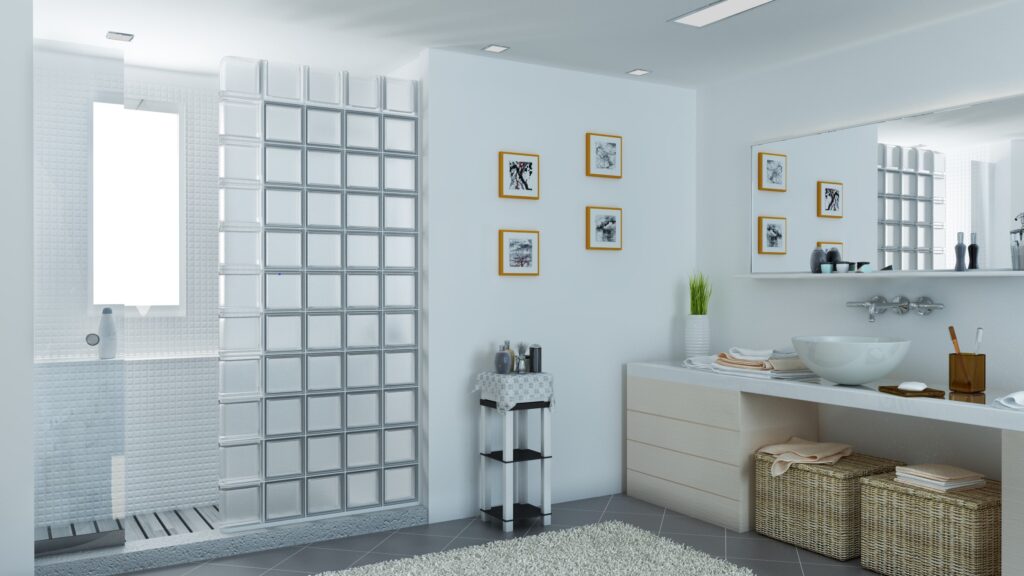
Many glass block shower walls are designed as open walk-in enclosures. This configuration eliminates the need for hinged doors, sliding tracks, and additional mechanical hardware. Over time, such components can corrode, loosen, or require replacement.
By removing these elements, glass block shower walls simplify the overall system. The enclosure acts as a splash barrier and an architectural feature. It reduces maintenance points and creates a cleaner visual appearance.
5. Design Flexibility and Architectural Appeal
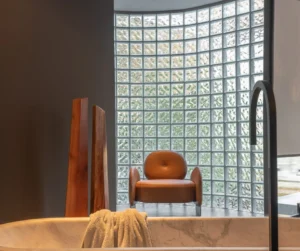
Glass block shower walls offer design versatility that traditional flat glass panels do not provide. You can curve blocks to form wide enclosures. You can angle them to fit unique layouts. They can include decorative textures and color accents.
This flexibility allows designers to create customized shower configurations that complement both contemporary and transitional interiors. Rather than acting only as a clear divider, the wall becomes a defined architectural feature. It enhances the bathroom’s overall composition.

Glass Block vs. Regular Shower Walls
When compared directly with tile or clear glass enclosures, glass block shower walls offer several distinct advantages:
- Greater inherent privacy
- Enhanced light diffusion
- Increased structural durability
- Reduced long-term maintenance
- Expanded design flexibility
While standard shower walls fulfill functional requirements, they typically separate privacy, light management, and structural performance into multiple components. Glass block integrates these attributes into a single material system.
Final Thoughts
Glass block shower walls combine strength, privacy, and natural light within one cohesive assembly. They offer a durable, low-maintenance option over traditional shower walls, while boosting the space’s architectural character. Rather than acting only as a barrier, glass block shower walls make the shower a lasting design feature. They improve performance and boost visual impact.


Give us a follow!